
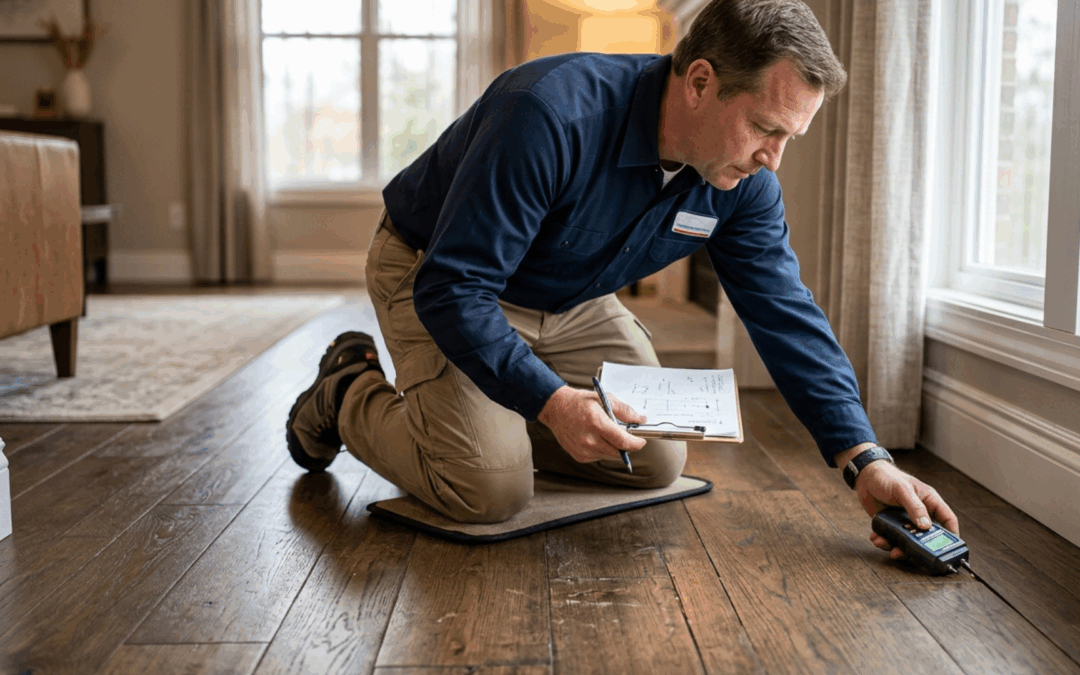
Floors don’t fail overnight. What starts as a small gap, a slight lift, or a faint creak can quickly turn into a costly repair if ignored. The problem isn’t just the damage you see, it’s what’s happening underneath.
That’s where professional flooring inspection services make all the difference. Instead of guessing, you get clear answers. And those answers often save you thousands in unnecessary repairs, replacements, and repeated problems.
Let’s walk through exactly how.
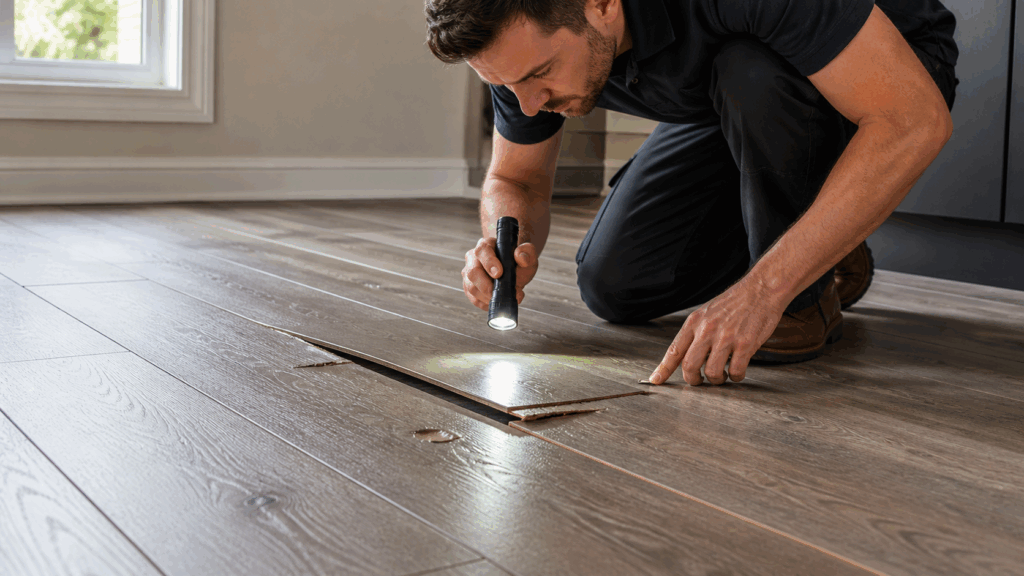
Common Flooring Problems That Lead to Expensive Repairs
Many major flooring failures start as minor issues that go unnoticed or are misunderstood. Over time, these small defects worsen and require more extensive and costly solutions.
Some of the most common problems include:
- Hardwood floor warping or cupping
- Tile cracks or loose tiles
- Laminate or vinyl lifting
- Moisture damage beneath the surface
- Adhesive breakdown or bond failure
Without a proper inspection, these issues are often treated at the surface level rather than at their source, leading to ineffective repairs and higher long-term costs.
Get to know: How Much Does a Floor Inspection Cost?
How Flooring Inspections Help You Save Money
A professional flooring inspection eliminates guesswork, identifies root causes early, and ensures the right solution is applied, helping you avoid unnecessary repairs, repeated issues, and costly full-floor replacements.
1. Early Problem Detection
Identifying issues in their early stages significantly reduces repair complexity and cost.
For instance, a minor moisture imbalance might only require improved ventilation or humidity control. If ignored, the same issue can escalate into mold growth, subfloor damage, or structural deterioration.
Early detection allows you to intervene before the problem spreads and becomes more expensive to resolve.
2. Accurate Diagnosis Prevents Wrong Repairs
One of the most common reasons for overspending on flooring repairs is incorrect diagnosis.
What appears on the surface is not always the root cause. For example:
- Surface cracks may result from subfloor movement
- A hidden moisture imbalance may cause warping
- Loose flooring could stem from improper installation techniques
Addressing the wrong issue leads to repeated repairs and wasted money. A professional inspection ensures the problem is correctly identified and resolved the first time.
3. Avoiding Full Floor Replacement
It’s easy to assume that visible damage means the entire floor needs replacement, but that’s often not the case.
An inspection can determine whether:
- The damage is limited to a specific area
- Targeted repairs are sufficient
- Environmental adjustments can stabilize the floor
This level of clarity can prevent premature full-floor replacement, which is one of the most expensive decisions a property owner can make.
Learn: How Floor Inspectors Identify Premature Flooring Failure
4. Identifying Installation Mistakes
Improper installation is a leading cause of flooring failure, and these issues are not always immediately visible.
Common installation-related problems include:
- Inadequate subfloor preparation
- Incorrect adhesive selection or application
- Missing or insufficient expansion gaps
- Failure to follow manufacturer specifications
A professional inspection can confirm whether installation errors are contributing to the problem, critical for warranty claims or contractor accountability.
5. Supporting Insurance and Warranty Claims
When flooring damage occurs, proper documentation plays a key role in recovering costs.
An inspection report provides:
- A clear explanation of the cause
- Supporting data and observations
- An unbiased, third-party assessment
This documentation increases the credibility of your claim and helps ensure that responsibility is accurately assigned.
6. Eliminating the Cycle of Recurring Issues
Temporary fixes often address symptoms without resolving the underlying cause, leading to repeated failures.
For example:
- Replacing damaged boards without addressing moisture leads to continued warping
- Repairing cracked tiles without stabilizing the subfloor results in future cracks
An inspection focuses on long-term solutions by identifying and correcting the root issue, helping you avoid ongoing repair expenses.
When Should You Get a Flooring Inspection?
Timing plays a critical role in minimizing costs and preventing damage.
You should consider a flooring inspection if:
- You notice gaps, warping, or uneven surfaces
- A newly installed floor is already showing signs of failure
- There are indications of moisture or water exposure
- You are buying, selling, or renovating a property
- You want to assess the condition of your flooring proactively
Taking action at the right time can prevent minor concerns from developing into major financial burdens.
Related article:
How to Find a Floor Inspector You Can Trust
What’s Included in a Flooring Inspection Report?
When Should You Hire a Flooring Consultant?
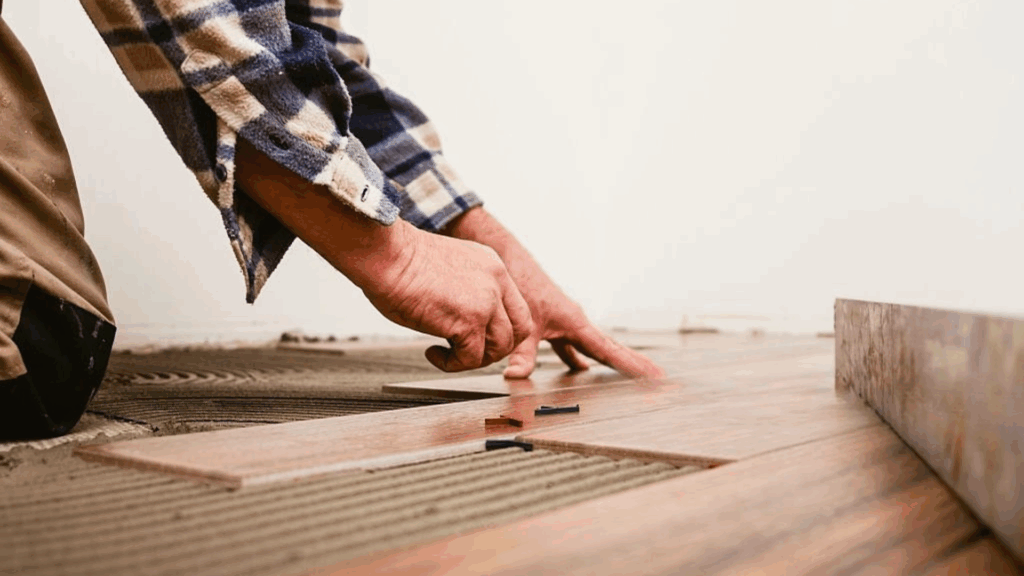
How Floorcovering Solutions Inc. Helps You Stay Ahead
When flooring issues arise or when you want to avoid costly repairs later, a certified flooring inspector can help determine the true cause of the problem.
At Floorcovering Solutions Inc., Henri Carr provides independent flooring inspections focused on identifying the underlying causes of flooring failures and performance issues.
With 49 years of flooring industry experience, Henri Carr evaluates conditions related to moisture imbalance, installation deficiencies, material performance, and subfloor concerns to determine why flooring problems are occurring.
Each inspection includes:
- Detailed on-site evaluation
- Moisture and environmental testing
- Review of flooring materials and installation methods
- Structured reporting with documented findings
This process helps homeowners, builders, and property managers make informed decisions about repairs, replacements, renovations, and future flooring installations while reducing the risk of recurring issues and expenses.
Check out: Why Builders and Contractors Trust Independent Inspectors
Replacing a few planks is affordable. Replacing an entire floor system, including subfloor repairs, is not.
An inspection helps catch these issues early, when they’re still manageable and far less expensive to fix.
Schedule a professional flooring inspection with Floorcovering Solutions Inc. to identify issues early and reduce the risk of major repair expenses.
FAQs
Q1. How long does a flooring inspection take?
Most flooring inspections take between 1 and 2 hours, depending on the size of the space, flooring type, and the complexity of the issue being evaluated.
Q2. Are flooring inspections a good long-term investment?
Yes, flooring inspections help you understand how your floor is performing over time, allowing you to make informed decisions that improve durability, prevent unexpected failures, and extend its lifespan.
Q3. Can a flooring inspection report be used as legal evidence?
Yes, professional inspection reports provide documented findings and root cause analyses that can serve as supporting evidence in contractor disputes, warranty claims, and insurance-related cases.
Q4. Do different flooring types require separate inspection methods?
Yes, each flooring type, such as hardwood, tile, laminate, or vinyl, has unique characteristics. Inspections are tailored to evaluate material-specific behavior, installation methods, and performance conditions.