

One day your carpet looks perfectly smooth, and the next, you start noticing ripples, wrinkles, and bumps appearing across the floor. These are common flooring problems that many homeowners and business owners experience. While some people assume these issues are simply caused by age, the reality is often much more complicated.
The good news is that these problems can usually be identified and resolved. However, finding the real cause requires more than a quick visual inspection. This is where a professional floor inspector can make all the difference.
A flooring inspector has the training and experience to determine why your carpet is buckling, whether it is due to installation errors, environmental conditions, product defects, or maintenance issues.
Let’s explore the most common causes of carpet buckling and wrinkling, the risks of ignoring the problem, and why a professional flooring inspection may be the best solution.
What Is Carpet Buckling and Wrinkling?
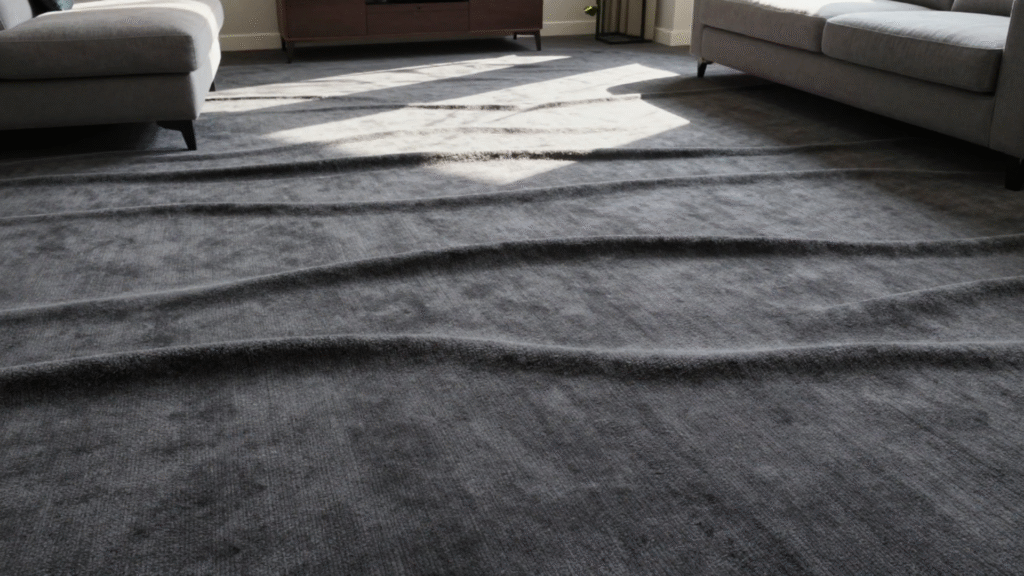
Carpet buckling refers to areas where the carpet lifts or forms raised sections that disrupt the smooth floor surface. Wrinkling, on the other hand, usually appears as long waves or ripples running across the carpet.
Although the terms are often used together, they are slightly different:
- Buckling typically involves localized lifting or bubbling
- Wrinkling appears as extended waves or loosened sections
Both issues indicate that the carpet has lost proper tightness or is being affected by underlying environmental or structural conditions.
Not sure what’s wrong with your carpet? Professional carpet flooring inspection reveals the real cause behind it.
Causes of Carpet Buckling and Wrinkling
Carpet buckling and wrinkling develop due to a combination of installation, environmental, and material-related factors that affect the long-term stability and appearance of the flooring.
1. Improper Carpet Installation
One of the leading causes of carpet buckling is poor installation practices.
When carpet is not properly stretched during installation, it is more likely to loosen over time. Professional installers typically use a power stretcher to ensure the carpet is tightly secured from wall to wall. However, in rushed or low-quality installations, a knee kicker may be used instead, which does not provide enough tension for larger rooms.
When the carpet is not stretched correctly:
- It develops slack over time
- Foot traffic pushes it into waves
- The backing loses stability and shifts
Even a high-quality carpet will wrinkle if it is not installed with proper tightness and secure fitting.
2. Excess Moisture or Humidity
Moisture is another major contributor to carpet buckling. Carpet materials and backing are sensitive to changes in humidity and water exposure.
This can happen due to:
- Spills that are not dried properly
- Water leaks from plumbing or appliances
- High indoor humidity levels
- Damp subfloors
When carpet fibers and backing absorb moisture, they expand. As they dry unevenly, the carpet may contract in different directions, causing ripples or waves and a loss of structural stability. In severe cases, mold may also grow beneath the carpet, worsening the problem.
3. Poor Subfloor Conditions
The condition of the subfloor plays a critical role in how carpet performs over time.
If the subfloor is:
- Uneven
- Dirty or dusty
- Moisture-damaged
- Improperly sealed
…it can prevent the carpet from lying flat and stable.
Even small imperfections in the subfloor can transfer through the carpet backing over time, eventually becoming visible as wrinkles or raised areas. A properly prepared subfloor is essential for long-term carpet stability.
4. Temperature and Humidity Fluctuations
Carpet naturally expands and contracts with changes in indoor climate. This is especially common in regions with seasonal humidity shifts or inconsistent indoor temperature control.
When the environment becomes more humid, carpet fibers absorb moisture and expand. When the air becomes dry, they contract. Over time, this cycle can weaken the carpet’s tension and lead to rippling.
Large open spaces and rooms with poor ventilation are especially vulnerable to this issue.
5. Heavy Furniture Movement
Furniture can also contribute to carpet buckling, especially when it is frequently moved or dragged.
Heavy objects can:
- Stretch carpet fibers unevenly
- Create pressure points in specific areas
- Disrupt the original tension of the installation
Once the carpet backing is disturbed, it may not return to its original flat position without professional restretching.
6. Aging Carpet and Backing Breakdown
Like any material, carpet has a lifespan. Over time, the backing material that holds the carpet together begins to degrade.
As carpet ages:
- The latex backing weakens
- Fibers lose elasticity
- Adhesive layers break down
This aging process makes it more difficult for the carpet to maintain its original shape. Even without external damage, older carpets are more likely to develop wrinkles and areas of loosened structure.
7. Improper or Missing Carpet Padding
Carpet padding (or underlay) is essential for maintaining stability and comfort. If the padding is too thin, low-quality, or improperly installed, it can contribute to buckling.
Common padding-related issues include:
- Uneven thickness across the floor
- Compression in high-traffic areas
- Shifting under the carpet surface
Without proper support, the carpet above it loses structural consistency and begins to ripple or wrinkle.
8. Poor Adhesive or Glue Failure (Glue-Down Installations)
In commercial spaces or certain residential applications, carpet is installed using adhesives. When these adhesives fail, the carpet loses its bond to the subfloor.
Adhesive failure can be caused by:
- Incorrect glue application
- Moisture contamination
- Low-quality adhesive products
- Subfloor contamination (dust, oil, or residue)
Once the bond weakens, sections of the carpet may lift or wrinkle, especially under foot traffic.
9. Improper Maintenance Practices
Even after installation, maintenance plays a role in carpet stability. Incorrect cleaning methods, such as excessive water extraction or aggressive scrubbing, can damage carpet fibers and backing.
Repeated over-wetting or harsh chemical use can:
- Break down adhesive layers
- Soften the backing structure
- Create uneven drying patterns
Over time, these issues contribute to distortion and wrinkling.
10. Unrecovered Extension and Dimensional Instability (Manufacturing-Related Issue)
In some cases, carpet buckling and wrinkling may be caused by excessive unrecovered extension, a manufacturing-related issue. Unrecovered extension is the amount of stretch that remains in the carpet after it has been stretched and allowed to relax.
If the carpet does not return close to its original size, it may develop ripples, wrinkles, or loose areas over time. Flooring inspectors use the Unrecovered Extension Test to determine whether permanent elongation has occurred. Excessive unrecovered extension may indicate backing distortion, dimensional instability, or a manufacturing defect, although installation-related factors can also contribute to the problem.
Related Articles:
Why Your New Floor Is Failing After Only a Few Months
What’s Included in a Flooring Inspection Report?
How Floor Inspectors Identify Premature Flooring Failure
Signs of Carpet Buckling and Wrinkling
Carpet issues usually develop gradually. Identifying early warning signs can help prevent more serious damage.
Common indicators include:
- Slight ripples forming in walkways or open areas
- Loose or soft spots underfoot
- Edges are beginning to lift away from the walls
- Uneven surface appearance under natural lighting
- Minor shifting near heavy furniture areas
Recognizing these signs early allows for timely corrective action before the problem spreads.
What inspectors notice in carpets might surprise you, explore the most common flooring issues.
How to Fix Carpet Wrinkling and Buckling
Fixing carpet buckling and wrinkling depends on the severity and underlying cause of the issue.
In minor cases, light rippling may temporarily improve as the carpet adjusts to room conditions, but this does not address the loss of tightness.
For moderate to severe cases, professional carpet re-stretching is usually required. This process restores proper tension by tightening the carpet and re-securing it along the edges.
If the issue is caused by moisture, installation errors, or subfloor problems, re-stretching alone may not be enough. In these situations, a detailed flooring evaluation is needed to determine whether the repair will hold or if further corrective work is required.
Note: When carpet buckling or wrinkling continues or returns after repair, a deeper inspection is necessary to identify the root cause. At Floorcovering Solutions Inc., we provide detailed flooring inspections to determine whether the issue is caused by installation errors, moisture conditions, or subfloor movement.
Henri Carr, a certified flooring inspector, delivers clear and unbiased assessments for homeowners, contractors, insurers, and legal professionals. If your carpet problem persists, contact us to schedule a professional inspection before the issue worsens.
How to Prevent Carpet Buckling and Wrinkling
Preventing carpet issues requires proper installation practices and long-term maintenance care.
Effective prevention methods include:
- Ensuring professional installation with proper stretching techniques
- Maintaining stable indoor humidity levels
- Addressing leaks or water intrusion immediately
- Preparing and leveling the subfloor before installation
- Avoid dragging heavy furniture across carpet
- Using appropriate cleaning methods that do not oversaturate the carpet
Consistent care helps maintain carpet tension and reduces the risk of long-term distortion.