
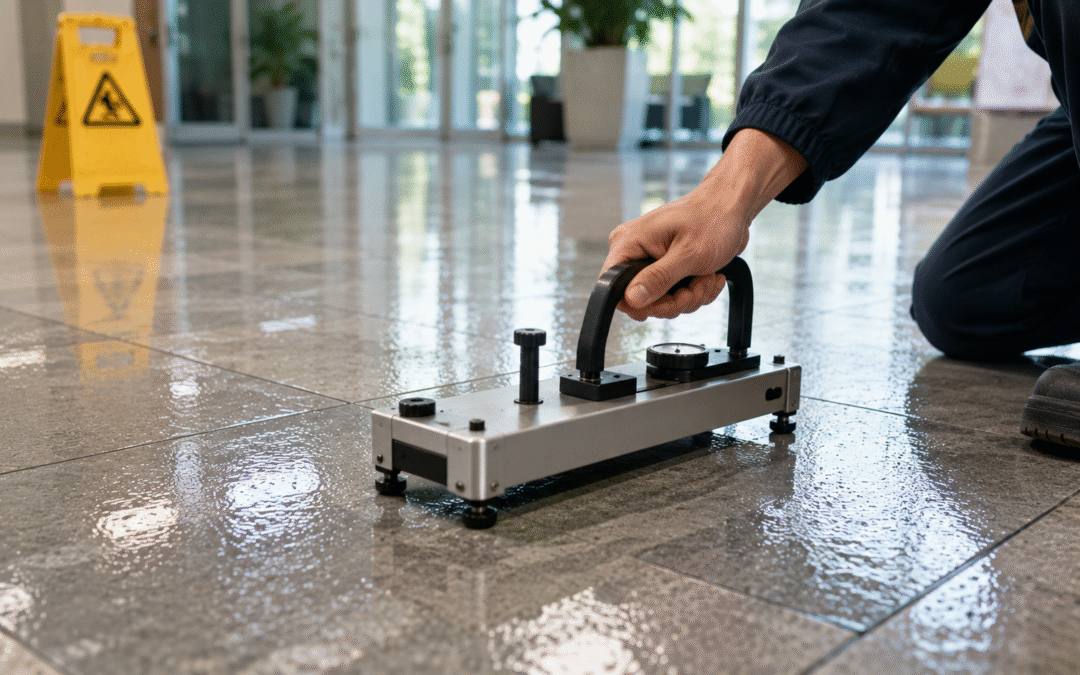
Have you ever walked across a floor that looked perfectly safe but suddenly felt slippery? It only takes a split second for a slip to result in a serious injury. While many people focus on a floor’s appearance, durability, or maintenance, its ability to provide reliable traction is just as important.
This is where slip resistance testing plays an important role. Rather than relying on visual observations alone, professional testing measures the coefficient of friction to evaluate the traction a flooring surface provides.
Whether you’re evaluating an existing floor, investigating an incident, or assessing a newly installed surface, slip resistance testing provides reliable information that supports informed decision-making.
What Is Slip Resistance Testing?
Floor Slip resistance testing is the process of measuring the amount of friction between a person’s footwear and a flooring surface. The goal is to determine whether the floor provides appropriate traction for its intended use.
Unlike a visual inspection, professional floor slip testing uses calibrated equipment to produce accurate, objective, and repeatable measurements. Testing can be performed on a wide range of flooring surfaces, including:
- Ceramic tile
- Porcelain tile
- Natural stone
- Vinyl flooring
- Hardwood flooring
- Laminate flooring
- Polished concrete
- Commercial flooring systems
The results help property owners, contractors, architects, facility managers, attorneys, and insurance professionals better understand how a floor performs and whether any safety concerns should be addressed.
Not all slip-and-fall cases are straightforward. Learn how an experienced expert witness evaluates flooring conditions and provides objective findings.
Why Is Slip Resistance Testing Important?
A floor can appear clean, level, and properly installed while still providing inadequate traction. Surface finishes, moisture, contaminants, wear, and maintenance practices all influence how safely people can walk across it.
Slip resistance testing helps identify potential concerns before they become larger problems. Some of its key benefits include:
Helps Reduce the Risk of Slip-and-Fall Accidents
Identifying areas with reduced traction allows property owners to address potential hazards before they contribute to a slip-and-fall incident.
Supports Safer Facilities
Commercial buildings, healthcare facilities, schools, hotels, restaurants, offices, and retail spaces often experience heavy pedestrian traffic. Understanding how flooring performs under daily use helps reduce potential slip hazards for employees and visitors.
Assists Flooring Investigations
When questions arise about whether a flooring surface contributed to an accident, testing provides measurable data that helps evaluate the floor’s condition.
Reduces Liability Exposure
Proactively evaluating floor traction demonstrates a commitment to maintaining reasonably safe walking surfaces and may help support risk management efforts.
Creates Valuable Documentation
Professional testing produces documented findings that can assist with maintenance planning, insurance claims, construction disputes, and legal matters.
The most expensive flooring problems often start small. Find out why a professional inspection is one of the smartest investments you can make.
How Is Slip Resistance Testing Performed?
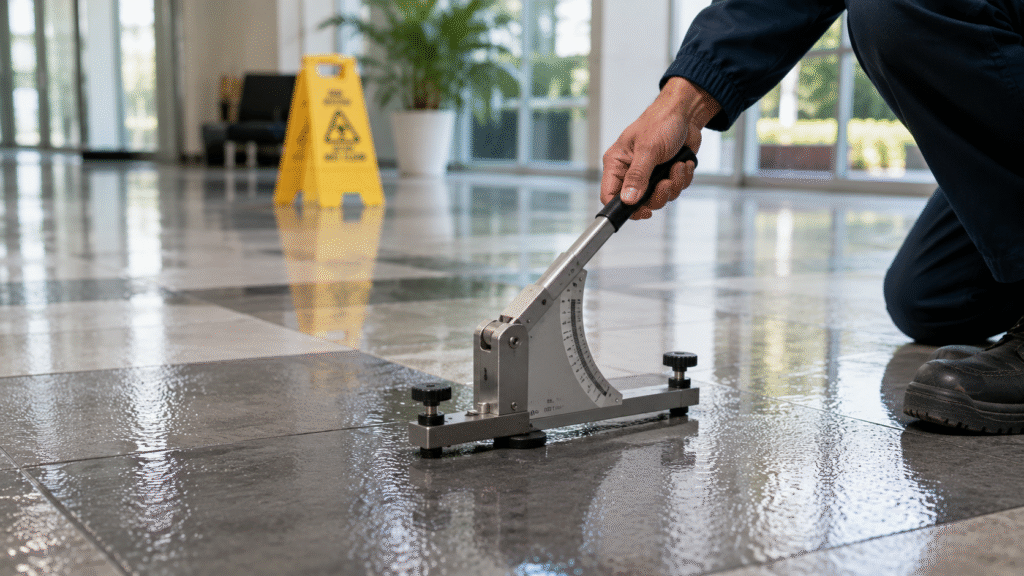
Professional slip resistance testing uses specialized equipment to evaluate floor traction. The process generally includes a site assessment, slip resistance measurements, analysis of the findings, and preparation of a detailed report.
1. Site Assessment and Visual Inspection
The process begins with an inspection of both the flooring surface and the environmental conditions that may influence slip resistance.
- Flooring material and surface texture
- Overall condition and visible wear
- Surface contamination or residue
- Cleaning and maintenance practices
- Indoor or outdoor location
- Moisture exposure
- Pedestrian traffic patterns
- Areas where slips or incidents have occurred
This assessment helps determine the most appropriate testing approach.
2. Slip Resistance Measurement
Using calibrated equipment, the inspector measures the coefficient of friction with calibrated slip-resistance testing equipment.
Measurements may be taken under:
- Dry conditions
- Wet conditions
- Multiple locations throughout the floor
Testing several areas provides a more complete understanding of the floor’s traction across the installation.
3. Evaluation of Findings
The results are reviewed alongside the flooring’s intended use, environmental conditions, and observations made during the inspection. This comprehensive evaluation provides context for understanding the floor’s overall slip resistance.
4. Documentation and Reporting
After testing is complete, a detailed report is prepared that typically includes:
- Testing locations
- Equipment and procedures used
- Friction measurements
- Site observations
- Professional observations and conclusions
This report provides a clear record of the evaluation and may be useful for maintenance planning, construction disputes, insurance claims, or legal proceedings.
Related Articles:
How Attorneys Use Expert Witness Services for Slip & Fall Accidents
How Much Does a Floor Inspection Cost?
How to Find a Floor Inspector You Can Trust
Factors That Can Affect Slip Resistance
Several factors influence how much traction a flooring surface provides over time.
- Surface Texture and Finish: Surface texture significantly impacts traction. Textured finishes often provide greater traction than highly polished or glossy surfaces, particularly when moisture is present.
- Water and Moisture: Rain, spills, condensation, and routine cleaning can reduce available traction. Entrances, kitchens, restrooms, pool decks, and other wet areas often require closer evaluation.
- Cleaning Products and Maintenance: Certain waxes, sealers, polishes, and cleaning products may leave residues that reduce traction. Improper maintenance practices can also affect how safely a floor performs.
- Wear and Aging: Heavy pedestrian traffic gradually changes the surface characteristics of many flooring materials. As floors age, periodic testing can help determine whether traction has changed.
- Surface Contaminants: Dust, grease, oils, and other contaminants create a barrier between footwear and the floor, increasing the potential for slips.
- Flooring Material: Every flooring material has unique traction characteristics. Surface composition, manufacturing methods, and intended application all influence slip resistance.
- Environmental Conditions: Temperature, humidity, and exposure to outdoor weather can also affect traction, especially in environments where conditions change frequently.
Why Choose Floorcovering Solutions Inc. for Slip Resistance Testing?
When flooring performance is in question, having the right expertise can make all the difference. At Floorcovering Solutions Inc., we provide professional slip resistance testing backed by more than 49 years of flooring industry experience. Our independent, objective evaluations provide reliable, objective data to help clients make informed decisions about flooring safety, maintenance, and performance.
Whether you’re assessing an existing floor, investigating a flooring concern, or seeking an expert opinion, Henri Carr provides thorough evaluations and clear, easy-to-understand reports tailored to your specific situation.
Our commitment to accuracy, professionalism, and technical expertise has made us a trusted resource for homeowners, businesses, contractors, attorneys, and insurance professionals alike.
Contact Floorcovering Solutions Inc. today to schedule a professional slip resistance evaluation and gain the expert insights you need to make informed decisions about your flooring.