

It often starts quietly. A small ripple appears in one area, followed by a gentle wave forming elsewhere. At first, it may not seem like a serious concern, just a slight change in the carpet’s appearance. But gradually, the once smooth and even surface begins to lose its shape. This is often one of the earliest signs of carpet delamination.
Unlike normal surface wear, this problem runs deeper within the flooring system. Carpet delamination is a structural failure where the carpet’s internal layers begin to separate and lose their strength. Because the issue develops internally, a proper flooring inspection is often required to identify the actual cause of the failure.
Let’s take a closer look at what carpet delamination is, why it happens, and how it can be addressed or prevented.
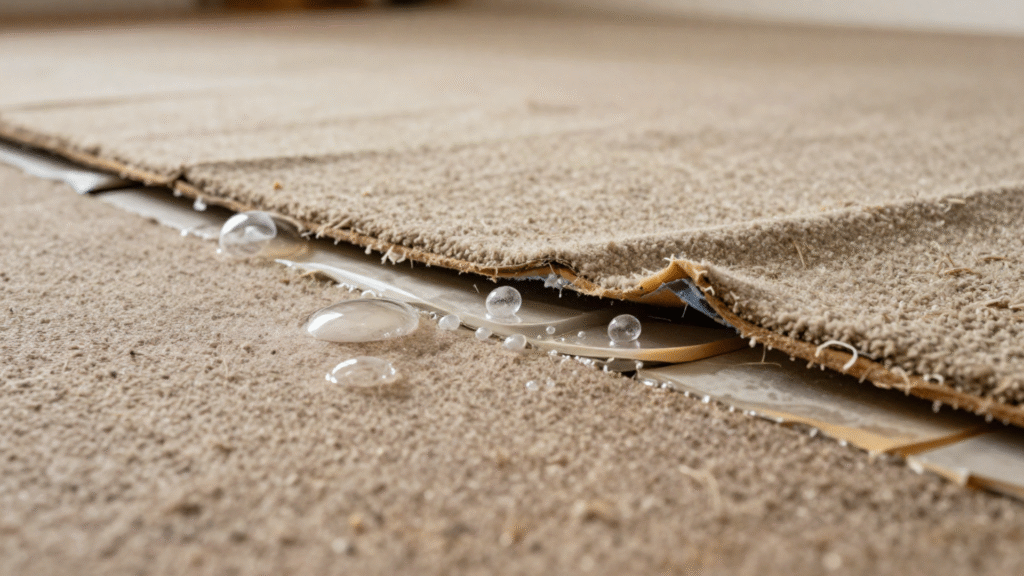
What Is Carpet Delamination?
Carpet delamination is the separation of the carpet’s bonded layers, typically the primary backing and secondary backing. Modern carpets are manufactured as multi-layered systems, where each layer plays a specific role in strength, stability, and performance.
The face fibers provide the visible surface, while the backing layers are responsible for structural support and dimensional stability. These layers are normally held together using latex or similar adhesive compounds.
When this bond fails, the carpet loses its unified structure. Even if the surface appears intact, internal separation weakens the entire flooring system and affects how it performs under normal use.
In simple terms, carpet delamination is similar to a laminated product coming apart. The surface may still look acceptable for a while, but the internal layers are no longer securely bonded.
What Carpet Delamination Looks Like
Most people don’t recognize it right away. It’s often mistaken for installation issues or simple stretching problems.
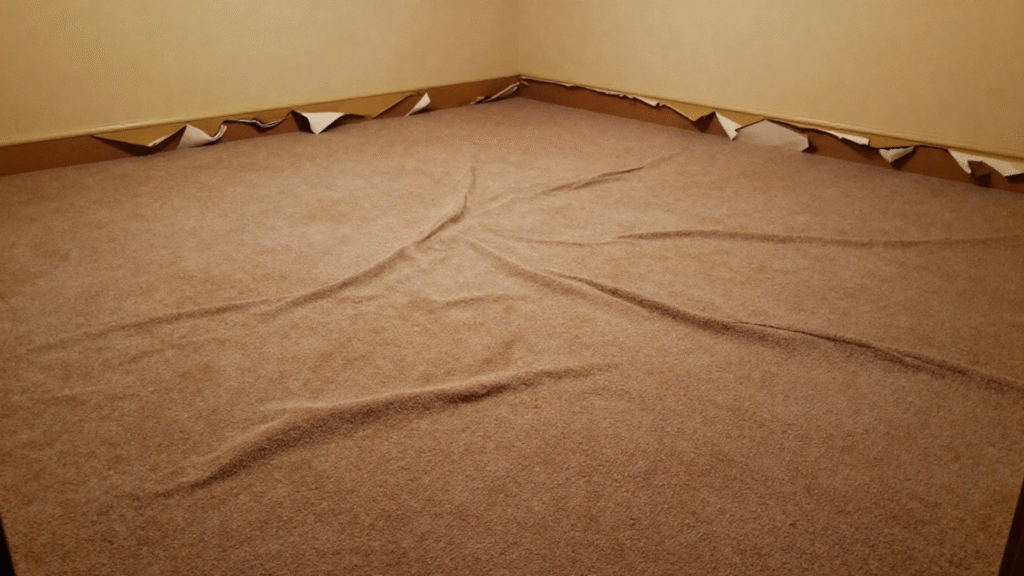
But carpet delamination tends to show up in a few noticeable ways:
- Waves that keep coming back even after re-stretching
- Soft or hollow-feeling spots underfoot
- Sections that bubble or lift slightly
- Wrinkles forming in walkways or high-use areas
- Carpet edges that no longer sit tight against walls or transitions
The key difference is persistence. Even after repairs, the issue often returns because the problem is inside the carpet itself, not just how it’s laid out.
What looks like a simple issue could be something bigger. Discover common carpet problems professionals identify.
What Causes Carpet Delamination?
Adhesive bonds don’t just disappear without a reason. In most cases, delamination happens gradually due to a mix of installation mistakes, moisture problems, everyday wear, or even issues from the manufacturing stage.
1. Excessive Moisture Exposure
Moisture is one of the most common contributors to carpet delamination. Water can weaken the adhesive that holds the backing layers together, causing separation over time.
Sources of moisture may include:
- Plumbing leaks
- Flooding incidents
- Roof leaks
- Excessive humidity
Even small amounts of recurring moisture can gradually compromise the carpet’s structural integrity. Once the adhesive bond begins to break down, the backing layers may start separating from one another.
Moisture damage starts beneath the surface. Learn why testing is the key to preventing costly flooring failures.
2. Manufacturing Defects
In some cases, delamination can result from problems during the manufacturing process. The adhesive used to bond the carpet backing layers may be insufficient, improperly applied, or defective.
If the bonding process does not meet quality standards, the carpet may begin separating under normal use conditions. Manufacturing-related delamination often becomes apparent within the first few years after installation.
Determining whether a manufacturing defect is responsible typically requires professional evaluation and testing.
3. Improper Carpet Cleaning Practices
Professional carpet cleaning is important for maintaining appearance and hygiene. However, incorrect cleaning procedures can sometimes contribute to delamination.
Over-wetting during extraction cleaning is a common concern. When excessive water penetrates the carpet backing and remains trapped, it can affect the adhesive bond between layers.
Using inappropriate cleaning chemicals may also impact the carpet’s construction if they interact negatively with the materials used in manufacturing.
Proper cleaning techniques and adequate drying times are essential for preserving carpet performance.
4. Heavy Traffic and Mechanical Stress
High-traffic areas experience constant foot traffic, furniture movement, and daily wear. Over time, these forces can place stress on the carpet’s internal structure.
Commercial buildings, office spaces, hotels, and busy households often experience greater mechanical stress than lower-traffic environments.
While quality carpets are designed to withstand normal use, excessive strain combined with other contributing factors may accelerate delamination.
5. Improper Installation
Although installation errors do not directly cause every case of delamination, certain installation practices can contribute to carpet failure.
Examples include:
- Excessive stretching during installation
- Incorrect seam construction
- Improper handling of carpet materials
- Failure to follow manufacturer guidelines
Improper installation can create tension within the carpet system, increasing the likelihood of backing separation over time.
Related Articles:
When Should You Hire a Flooring Consultant?
How Much Does a Floor Inspection Cost?
How to Find a Floor Inspector You Can Trust
How to Prevent Carpet Delamination
The best way to handle delamination is to ensure it never starts. By adopting a few protective habits, you can keep your carpet structurally sound for its intended lifespan.
| Prevention Step | Action | Benefit |
| Moisture control | Clean spills immediately and avoid prolonged dampness | Prevents latex breakdown and mold growth. |
| Professional cleaning | Hire certified professionals who use high-extraction truck-mounted systems. | Reduces risk of over-wetting |
| Protect high-use areas | Use protective mats under rolling furniture | Minimizes mechanical stress |
| Proper installation | Ensure your installation team uses a mechanical power-stretching system, not just a knee-kicker. | Maintains structural stability |
Consistent maintenance and correct installation practices significantly reduce the likelihood of delamination developing over time.
Can Delaminated Carpet Be Repaired?
Carpet delamination can sometimes be repaired, but it depends on the severity and underlying cause. In minor cases, localized repairs or re-bonding methods may offer limited improvement in stability.
However, when the separation is widespread, repairs are often not reliable because the internal bond between carpet layers has already failed. In such situations, replacement is usually the more practical solution.
Identifying the root cause is essential before any repair attempt to prevent the issue from recurring. A professional assessment helps determine the most appropriate course of action and avoids ineffective DIY repairs.
How Floorcovering Solutions Inc. Assists Property Owners
Hidden flooring issues are often misunderstood, misdiagnosed, or attributed to the wrong cause. That’s where professional evaluation becomes essential. At Floorcovering Solutions Inc., we provide independent flooring inspection services designed to identify the root causes of carpet performance issues.
Led by Henri Carr, a certified flooring inspector with decades of industry experience, our inspections focus on objective analysis rather than assumptions. We examine installation factors, environmental conditions, maintenance history, manufacturing characteristics, and flooring performance to determine what contributed to the reported concern.
Our detailed findings help homeowners, contractors, attorneys, insurance professionals, and property managers gain a clear understanding of carpet failures and the factors that may have influenced them.
Contact Floorcovering Solutions Inc. today to schedule an expert flooring inspection and get the answers you need.