
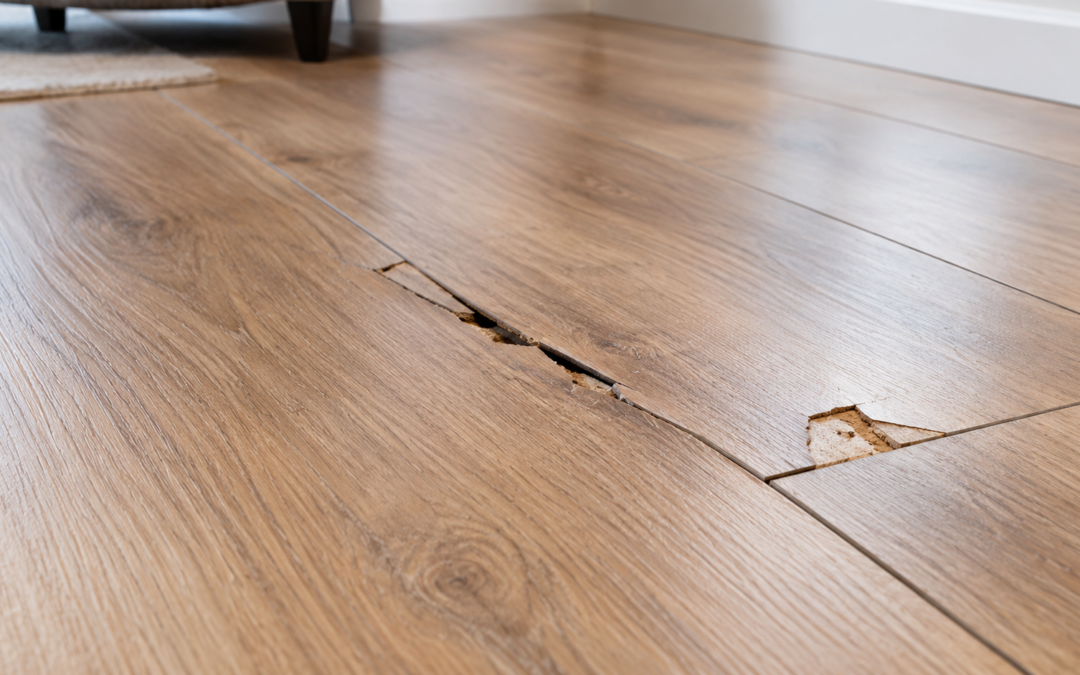
Laminate flooring is designed to handle everyday life, but that does not mean it is impossible to damage. Over time, you may notice a small chip along an edge, a crack running across a plank, or pieces of the surface breaking away.
While these problems can sometimes look like simple wear and tear, the underlying cause may involve installation, physical impact, the subfloor, moisture, or the flooring product itself.
If you are wondering why laminate flooring cracks or chips, it helps to look beyond the damaged spot. A professional evaluation can determine whether the problem is isolated or connected to a larger flooring issue.
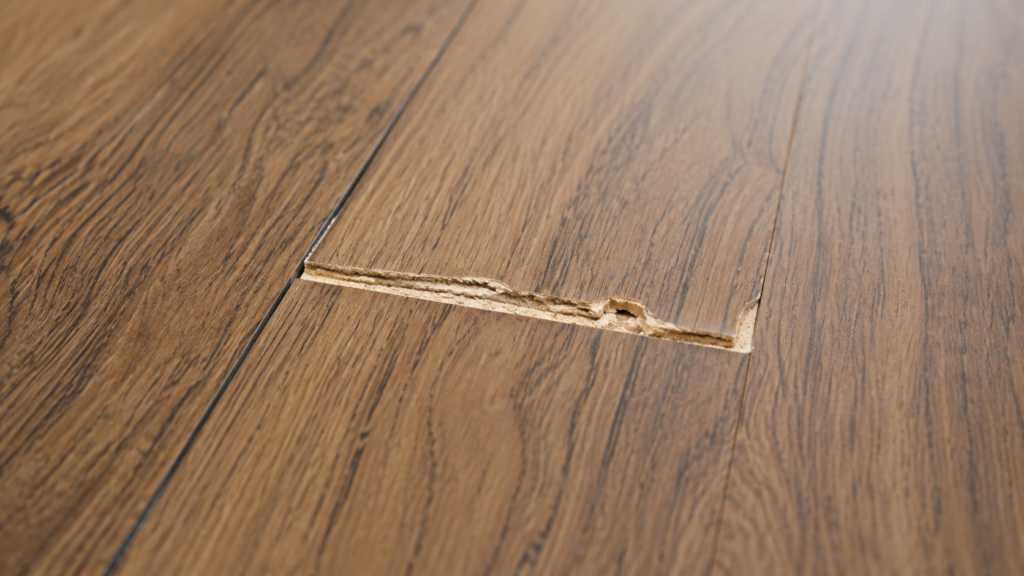
What Causes Cracks or Chips in Laminate Flooring?
1. Improper Installation
Installation mistakes can affect how laminate planks perform after they are installed. Problems with the locking joints, plank positioning, or required expansion space can interfere with the flooring’s intended movement.
Potential installation concerns include:
- Locking joints that were not fully engaged
- Failure to follow the manufacturer’s installation requirements
- Improper plank positioning that places stress on the joints
Because installation problems can affect multiple areas, an inspection of the overall installation may reveal issues that are not obvious from one damaged plank.
2. Heavy Impact or Physical Damage
Laminate flooring can be damaged by a sudden impact, particularly when a heavy or sharp object strikes the surface.
Dropping furniture, appliances, tools, or other hard objects can cause localized damage. Depending on the force involved, the result may be a small chip, a crack extending from an edge, or a damaged section of the decorative surface.
Damage can also occur when heavy furniture is dragged across the floor instead of being lifted. The concentrated pressure and friction can weaken or break the surface layer.
One useful clue is the location of the damage. If cracking or chipping is isolated to an area where an impact could reasonably have occurred, physical damage may be more likely than a widespread flooring problem.
3. Uneven Subfloor
Laminate flooring depends on the surface underneath it for consistent support. If the subfloor contains noticeable high spots, low areas, or other irregularities, sections of the flooring may not sit properly.
This can result in:
- Planks flexing when walked on
- Cracks or damage developing repeatedly in unsupported areas
If the same area feels different underfoot or shows recurring damage, the subfloor condition should be investigated. Simply addressing the visible damage may not resolve the underlying problem.
4. Moisture Exposure
Moisture can affect laminate flooring when water reaches areas that are not adequately protected. Leaks, spills, appliances, excessive cleaning, and moisture from below can all be potential sources.
Moisture-related damage may include:
- Swollen or deteriorated plank edges
- Changes around joints
- Separation of surface layers
If chipping or cracked laminate flooring occurs together with swelling or distortion, identifying the moisture source is important before replacing the affected flooring.
5. Manufacturing or Product Defects
In some cases, the flooring product itself may need to be investigated. A problem with the construction, materials, bonding, or other components of a laminate plank can potentially affect its performance.
A product-related concern may be worth investigating when:
- Similar damage appears on several planks
- Problems develop unusually early under normal use
- Damage occurs without an obvious impact or environmental cause
A potential manufacturing issue should not be assumed based only on appearance. The product, installation, site conditions, and damage pattern should be evaluated together.
Related Articles:
5 Reasons Moisture Testing Is Essential for Flooring
How to Identify the Causes of Bubbles on Laminate Flooring
How Much Does a Floor Inspection Cost?
What Should You Do If Your Laminate Flooring Is Cracking or Chipping?
If you notice cracks or chips in your laminate flooring, take a few steps before replacing the damaged planks:
- Document the damage: Take clear photographs and record the locations of any cracks or chips.
- Look for patterns: Check whether the damage is concentrated near plank joints, edges, doorways, high-traffic areas, or a specific section of the room.
- Consider when it started: Note when you first noticed the problem and whether it followed a leak, furniture move, installation, remodeling, or another event.
- Avoid immediate replacement: Replacing damaged planks without identifying the cause may allow the same problem to affect the new flooring.
- Consider a professional inspection: If the cause is unclear, an independent flooring inspector can evaluate the damaged areas, installation, subfloor conditions, and other factors that may be contributing to the failure.
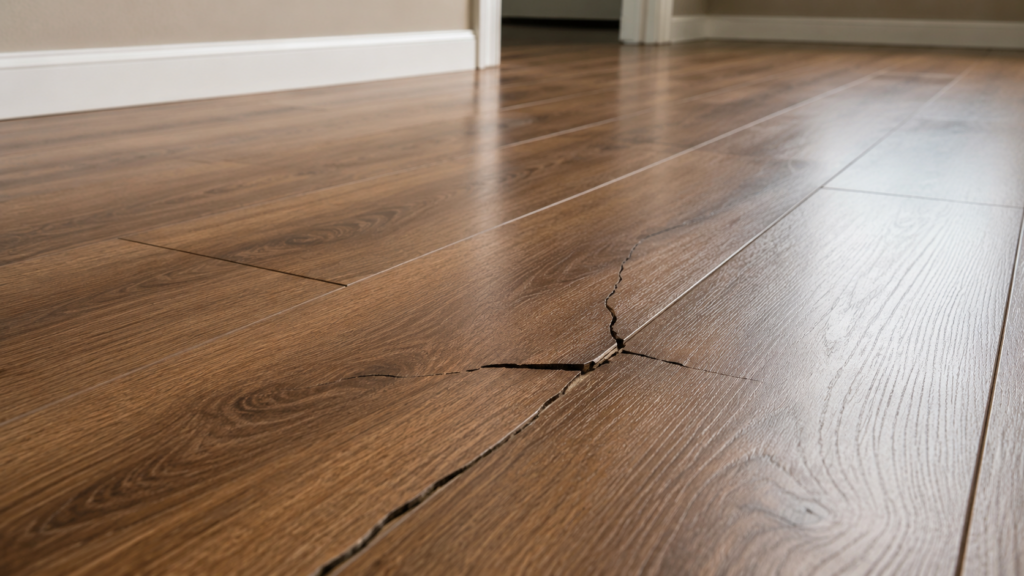
Professional Help for Damaged Laminate Flooring
At Floorcovering Solutions Inc., we understand that laminate flooring damage can raise more questions than answers. A cracked or chipped plank may seem like a simple repair issue, but determining why the damage occurred can require a closer look at the entire flooring system.
Henri Carr provides independent flooring inspection and consulting services for laminate flooring concerns, including installation problems, product-related issues, moisture conditions, and other flooring failures. This helps provide an objective assessment of what may have contributed to the problem.
If you are dealing with unexplained cracks, chips, or other laminate flooring problems, contact Henri Carr to discuss your flooring inspection, consulting, or flooring-related dispute.