
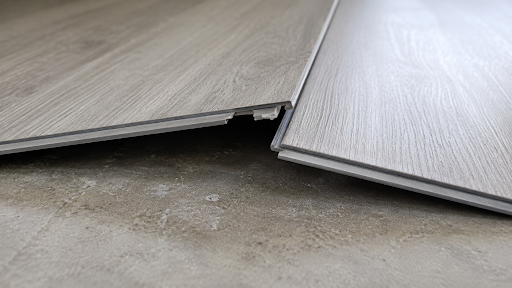
You picked vinyl plank flooring because it looked like the easy choice: attractive, durable, water-resistant, and simple to install. Then, months later, you notice a plank separating, a raised edge, or a floor that no longer feels solid underfoot.
So, what went wrong?
Click-lock vinyl flooring can perform very well when the product, subfloor, environment, and installation conditions are all suitable. When one of those factors is overlooked, however, problems can develop quickly. Understanding the most common causes of failure can help you identify potential problems and determine what may need investigation.
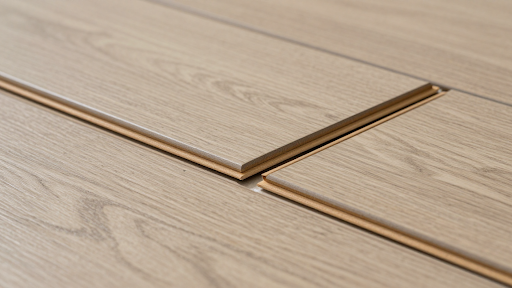
What Causes Click-Lock Vinyl Flooring to Fail?
1. The Subfloor Was Not Properly Prepared
Click-lock flooring may be floating, but that does not mean the subfloor is unimportant. The surface beneath needs to provide a stable, reasonably flat foundation for the planks.
If the subfloor has excessive unevenness, dips, high spots, or other irregularities, the flooring may flex as people walk across it. That movement places stress on the locking joints and can eventually cause them to separate or become damaged.
A concrete or wood subfloor may also have existing conditions that are not obvious before installation. Cracks, deterioration, movement, or inadequate preparation can affect how the finished floor performs.
This is why subfloor preparation should be evaluated before installation rather than treating it as an afterthought.
Is your floor acting differently? Learn the warning signs of subfloor damage before a small problem becomes a costly repair.
2. Moisture Was Present Below the Flooring
Although vinyl flooring is generally resistant to surface water, that does not eliminate the potential for moisture problems within or beneath the flooring assembly.
Concrete subfloors, in particular, can contain moisture that moves toward the flooring after installation. If moisture conditions are not properly evaluated before the floor is installed, the resulting environment may contribute to installation problems or affect other components of the flooring system.
Moisture can also come from plumbing leaks, water intrusion, elevated humidity, or other sources.
The important point is that moisture should be assessed across the entire flooring assembly. Simply looking at the vinyl surface may not reveal where the problem started.
A beautiful floor can fail from moisture you never see. Find out why moisture testing is an important step before installation.
3. The Flooring Was Installed in Unsuitable Conditions
Even when the flooring and subfloor are suitable, installation practices can affect how a click-lock floor performs.
Problems may develop when installers do not follow the flooring manufacturer’s specific requirements regarding:
- Installation procedures
- Expansion spacing
- Room and substrate conditions
- Approved installation methods
- Acclimation or temperature requirements, where specified
- Approved underlayment or moisture-control systems
- Layout and installation limitations
For example, a floating floor needs sufficient space to accommodate movement. If the perimeter is improperly restricted or the flooring is installed against fixed objects without the required clearance, movement within the floor can become a concern.
The exact requirements vary by product, so the manufacturer’s installation instructions should always be followed rather than relying on general assumptions about click-lock vinyl flooring.
4. The Locking Joints Were Damaged or Improperly Engaged
The locking mechanism is one of the most important parts of a click-lock vinyl floor. Each plank needs to connect properly with the surrounding planks to create a stable floating surface.
If a joint is not completely engaged, the problem may not be immediately visible. A plank can appear to be in place while the locking profile is only partially connected. Continued foot traffic can then place additional stress on that connection.
The locking profile can also be damaged during installation. Excessive force, incorrect positioning, or using inappropriate tools can damage the edge of a plank. Some manufacturers specifically warn against using tools or installation methods that can damage the locking mechanism.
Once a locking joint has been compromised, simply pushing the plank back into position may not solve the underlying problem. The surrounding planks and connections should also be examined to determine whether the failure is isolated or part of a larger installation issue.
5. The Product Was Not Appropriate for the Conditions
Product selection can become a concern when the flooring does not match the conditions where it is installed, such as:
- Using a product unsuitable for the intended application
- Selecting flooring without considering expected traffic
- Choosing a product incompatible with the substrate
- Ignoring site-specific environmental conditions
- Failing to follow the manufacturer’s application limitations
Click-lock vinyl products can differ in construction, specifications, and installation requirements. Therefore, a flooring failure should not automatically be attributed to a defective product. The product itself, installation, substrate, and surrounding conditions should all be considered when determining the cause.
Related Articles:
How Floor Inspectors Identify Premature Flooring Failure
Why Your New Floor Is Failing After Only a Few Months
How Improper Acclimation Ruins Flooring Installations
How Can You Tell If Click-Lock Vinyl Flooring Is Failing?
Not every flooring issue looks the same. Depending on the underlying cause, you may notice:
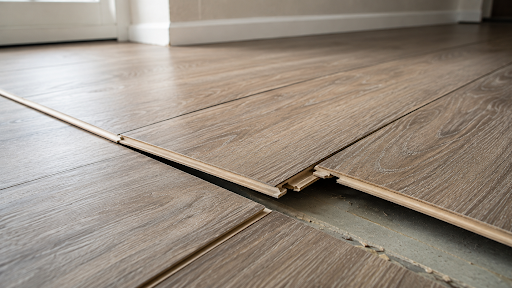
- Gaps developing between planks
- Planks separating at the joints
- Sections that move when walked on
- Raised or lifted edges
- Buckling in certain areas
- Cracked or damaged locking connections
- A noticeable clicking or movement underfoot
The location and pattern of the problem can provide useful clues. For example, isolated movement may point toward an issue beneath a particular section, while widespread movement may indicate a larger installation or environmental concern.
Rather than simply pushing separated planks back together, it is worth identifying why the joint failed in the first place.
Need Help Identifying the Cause of Your Flooring Failure?
At Floorcovering Solutions Inc., we understand that a flooring failure is not always as straightforward as it looks.
Henri Carr brings more than 49 years of flooring industry experience to flooring inspections, consultations, and failure evaluations. We evaluate vinyl flooring problems by looking beyond the visible symptom to identify the conditions that may have contributed to the failure.
Our evaluations can address concerns involving installation, subfloor conditions, moisture, product performance, and other factors that may affect click-lock vinyl flooring.
Whether you are a homeowner dealing with a failing floor, a contractor investigating an installation concern, or an attorney or insurance professional dealing with a flooring dispute, determining the actual cause is an important first step.
If your click-lock vinyl flooring is showing signs of failure, contact Floorcovering Solutions Inc. for a professional vinyl flooring inspection to help determine the underlying cause.