
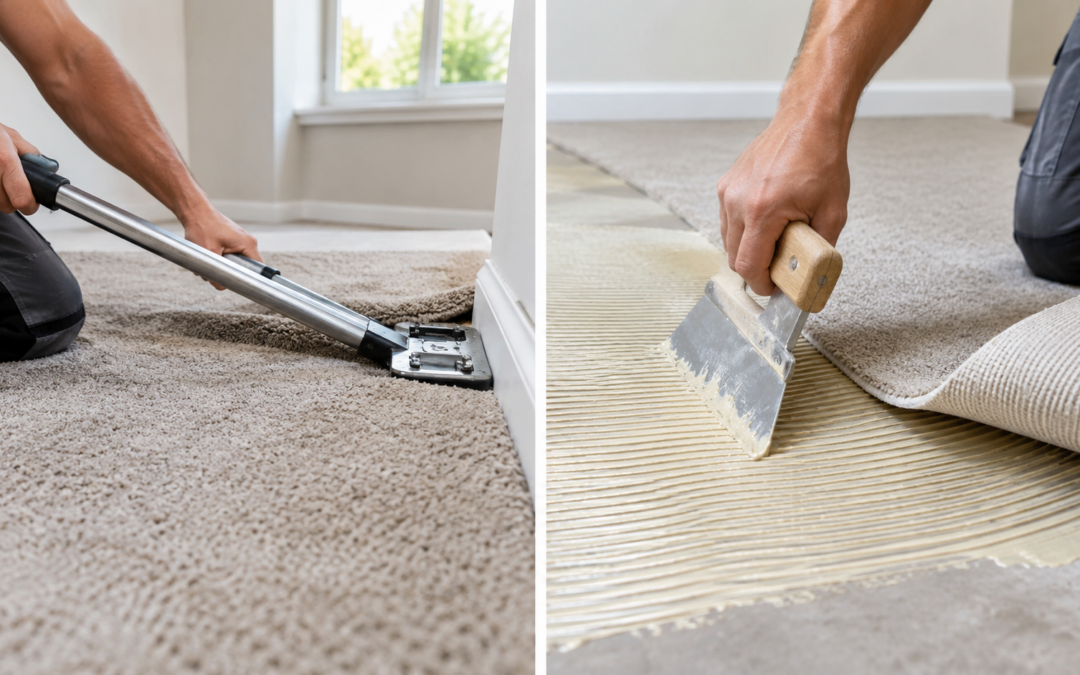
Choosing carpet is only part of the flooring decision. The way it is installed can also affect how the finished surface looks, feels, and performs over time.
Two common installation methods are stretch-in and glue-down carpet. Each uses a different approach to secure the carpet, and each can develop different problems when the installation, site conditions, materials, or maintenance do not align with the flooring requirements.
Understanding these differences can be especially important when carpet develops wrinkles, bubbles, loose areas, seam problems, or other conditions that are difficult to explain. A professional evaluation can help determine what may be contributing to the problem.
How Stretch-In Installation Works
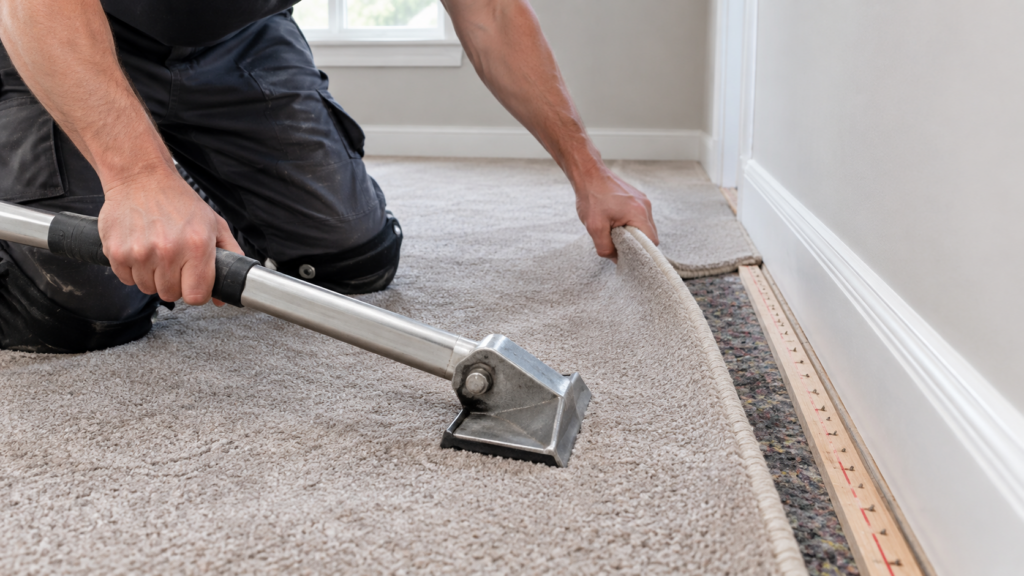
Stretch-in installation uses a combination of tack strips, carpet cushion, and carpet. Tack strips are secured around the perimeter of the room, while the cushion is placed between the substrate and carpet.
The carpet is positioned over the cushion and stretched to achieve the tension required for the installation. The edges are then secured to the tack strips, creating tension across the carpet.
Proper stretching is important because the carpet needs to remain sufficiently tensioned after installation. The installation also requires appropriate positioning of seams, edges, and transitions.
Common Problems With Stretch-In Carpet
- Wrinkling or buckling: Carpet that is not stretched properly may develop excess material that forms wrinkles, waves, or raised areas.
- Loose carpet: If the carpet is not securely attached to the tack strips, sections may move, loosen, or pull away from the perimeter.
- Seam separation: Poor seam construction, unsuitable seam materials, or installation conditions can cause seams to become visible or separate.
- Edge movement: Carpet edges may pull away from the tack strips when the perimeter attachment or installation is inadequate.
- Indentation and premature wear: The type and condition of the cushion, along with traffic and use, can affect how the carpet responds to foot traffic and furniture.
A wrinkle does not automatically mean the carpet was improperly stretched. The carpet, cushion, substrate, room environment, and installation history may all need to be considered.
How Glue-Down Installation Works
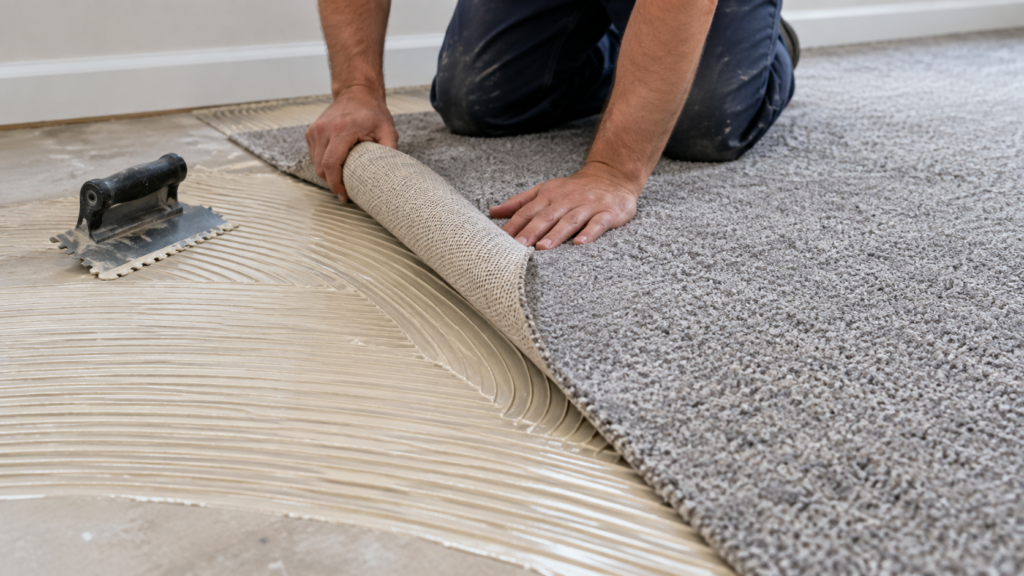
Glue-down carpet is attached directly to the prepared substrate with an adhesive. Unlike a traditional stretch-in system, the carpet is not held in place by tack strips and stretched over a separate cushion system.
The adhesive is selected according to the carpet, backing, substrate, and installation requirements. The substrate also needs to provide an appropriate surface for bonding.
Once the carpet is positioned and bonded, the installation depends on the adhesive connection between the carpet and substrate. Because of this, proper substrate preparation and adhesive application are important parts of the installation.
Common Problems With Glue-Down Carpet
- Bubbling or raised areas: Sections of carpet may develop raised or uneven areas because of installation conditions, movement, air, substrate irregularities, or other factors.
- Loose carpet: If the adhesive does not adequately bond the carpet to the substrate, sections may become loose or lift from the floor.
- Adhesive bond problems: Incorrect adhesive, insufficient coverage, improper application, or unsuitable installation conditions can affect how well the carpet remains bonded.
- Seam issues: Seams may become visible, open, or otherwise show problems when the carpet and seam installation are not properly coordinated.
- Substrate telegraphing: Uneven areas, joints, cracks, or other irregularities in the substrate may become visible through the carpet after installation.
With glue-down carpet, examining the relationship between the carpet, adhesive, and substrate can be important when determining why a problem developed.
Bubbles and separation can be more than a cosmetic issue. Learn what causes carpet delamination and how to recognize the signs.
Stretch-In vs. Glue-Down: Installation Differences
Although both methods are designed to secure carpet, they do not respond to installation conditions in exactly the same way.
| Consideration | Stretch-In | Glue-Down |
|---|---|---|
| Installation system | Mechanical attachment with perimeter tension | Direct bonding to the substrate |
| Cushion configuration | Typically uses a separate cushion | Depends on the specified carpet system |
| Underfoot characteristics | Influenced significantly by the cushion | Influenced by the carpet and surface underneath |
| Removal | Components can generally be separated more easily | Existing adhesive may complicate removal |
| Future adjustment | Some installations can be re-stretched | Corrections may require removal and rebonding |
| Replacement considerations | Existing components can generally be removed separately | Remaining adhesive may affect subsequent installation |
The appropriate installation method depends on the carpet construction, intended use, substrate, manufacturer’s instructions, and project requirements.
What Should Be Checked When Carpet Develops Problems?
When carpet develops wrinkles, bubbles, loose areas, seam problems, or other visible changes, the condition itself may not identify the underlying cause.
An evaluation may need to consider several parts of the flooring system, including:
Installation Method
First, it is important to determine whether the carpet was installed using a stretch-in or glue-down system. Tack strips, cushion, adhesive, seams, and other installation components can help identify how the carpet was installed.
Carpet and Installation Materials
The carpet backing, cushion, adhesive, seam materials, and other components should be reviewed to determine whether they are appropriate for the installation and compatible with the flooring system.
Substrate Conditions
The surface beneath the carpet can affect how the installation performs. Uneven areas, contamination, deterioration, cracks, or moisture conditions may contribute to problems with the finished carpet.
Site and Environmental Conditions
Conditions after installation can also affect carpet performance. Depending on the flooring system, temperature, humidity, moisture exposure, traffic, furniture movement, rolling loads, and cleaning practices may need to be considered.
Pattern and Location of the Damage
The location and pattern of the problem can provide useful information. A single raised area, for example, may require a different investigation from widespread wrinkling or loose carpet throughout a room.
Reviewing these factors together can help determine whether the condition may be related to installation, materials, substrate conditions, site conditions, use, or another contributing factor.
Related Articles:
Common Carpet Problems Identified by Certified Inspectors
How Floor Inspectors Identify Premature Flooring Failure
What’s Included in a Flooring Inspection Report?
Professional Evaluation of Carpet Flooring Problems
When carpet develops wrinkles, buckling, loose areas, bubbling, seam problems, or other installation concerns, identifying the visible condition is only part of the process. Determining what contributed to the problem may require a closer evaluation of the carpet, installation method, substrate, materials, and relevant site conditions.
Floorcovering Solutions Inc. provides independent flooring inspection, consulting, and expert witness services for carpet-related concerns. Henri Carr brings more than 49 years of flooring industry experience and evaluates flooring conditions for homeowners, contractors, manufacturers, insurance professionals, property owners, and attorneys.
Our independent evaluation can help document the condition, assess potential contributing factors, and provide objective findings when a flooring problem requires further review.
Contact us today to schedule a flooring inspection or discuss your carpet concerns.