
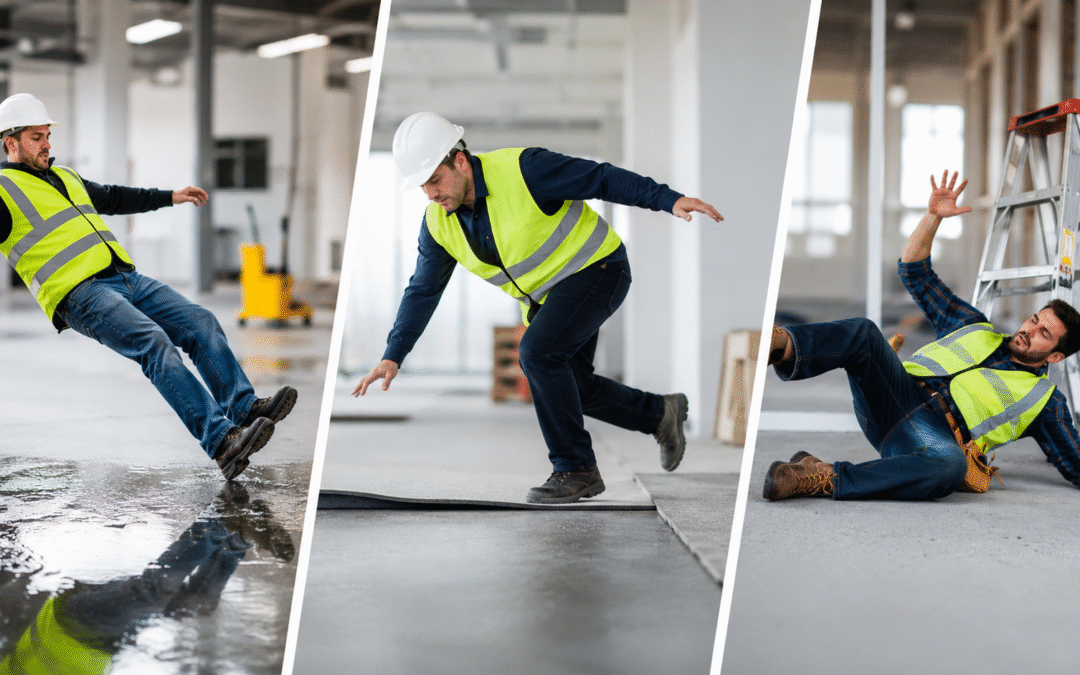
Most of us don’t think much about the floor beneath our feet until something goes wrong. When an accident happens, it’s common to hear people describe it as a “slip and fall incident.” But that phrase doesn’t always explain what really happened.
A slip, a trip, and a fall are three different types of hazards, and knowing the difference can help you better understand safety risks in homes, workplaces, and commercial properties.
In this article, we’ll look at what makes each hazard unique, why the distinction matters, and how a professional flooring inspection can help evaluate flooring conditions that may contribute to these hazards.
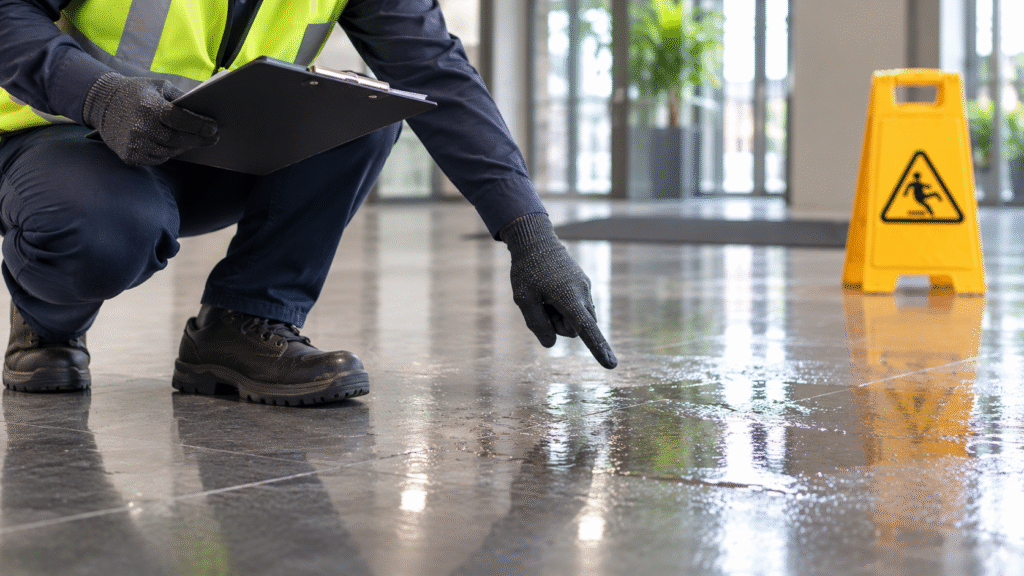
What Is a Slip Hazard?
A slip hazard occurs when there is not enough traction between a person’s footwear and the walking surface. Instead of maintaining grip, the foot slides unexpectedly, causing the person to lose balance.
Unlike many hazards that are easy to see, slip hazards can exist even when a floor appears clean and undamaged. In many cases, the floor itself is not inherently unsafe, but contaminants or environmental conditions temporarily reduce the available traction.
Common Causes of Slip Hazards
Several conditions can reduce the traction of a floor, including:
- Wet or recently cleaned flooring
- Oil, grease, soap, or other contaminants
- Highly polished stone or tile surfaces
- Flooring with inadequate slip resistance
- Improper floor finishes or coatings
- Condensation caused by humidity or temperature changes
- Ice, snow, or rain tracked indoors
Many slip accidents happen within just a fraction of a second because the loss of traction occurs immediately after the foot contacts the floor.
What Is a Trip Hazard?
A trip hazard occurs when the foot strikes an object or uneven surface instead of moving forward smoothly. Instead of sliding, the foot suddenly catches on an object or uneven surface while the body’s momentum continues moving forward.
Trip hazards commonly result from changes in floor elevation, obstacles, or damaged flooring materials.
Common Causes of Trip Hazards
Examples include:
- Raised flooring edges
- Loose or curled carpet
- Broken or cracked tiles
- Uneven concrete
- Damaged transition strips
- Electrical cords across walkways
- Poorly secured entrance mats
- Warped hardwood flooring
- Missing floor tiles
Trip hazards are often visible during a careful inspection, although some may become more dangerous in areas with poor lighting or heavy pedestrian traffic.
What Is a Fall Hazard?
A fall hazard refers to any condition that increases the risk of a person falling, whether on the same level or from one level to another.
While slips and trips describe the events that initiate many accidents, a fall is the resulting incident that can lead to injury.
Fall hazards may include:
- Stairways
- Elevated platforms
- Loading docks
- Balconies
- Unprotected edges
- Ramps
- Ladders
- Changes in floor elevation
Not every fall begins with a slip or trip. A person may lose balance because of poor lighting, missing handrails, unexpected elevation changes, or unstable walking surfaces.
Related Articles:
How Floor Inspectors Identify Premature Flooring Failure
What Does a Flooring Expert Witness Actually Do?
What Causes Carpet to Buckle and Wrinkle?
Comparing Slip, Trip, and Fall Hazards
Although these hazards can result in similar injuries, they begin in very different ways.
| Hazard | How It Starts | Primary Safety Concern |
| Slip | The foot loses grip on the floor. | Inadequate traction |
| Trip | The foot strikes an obstruction or uneven surface. | Interrupted walking motion |
| Fall | A person falls because of an unsafe environment or an elevation change. | Loss of balance resulting in a same-level or elevated fall |
Understanding which event occurred first helps identify the actual hazard instead of simply describing the outcome.
Why It Is Important to Identify the Correct Hazard
Many people simply describe an incident as a “slip and fall.” However, that description may not accurately explain what happened.
Determining whether the incident involved a slip, trip, or another contributing factor helps answer important questions such as:
- Was the flooring appropriate for the environment?
- Did the installation comply with industry standards?
- Was the floor properly maintained?
- Did contaminants contribute to the accident?
- Was the hazard temporary or permanent?
- Could the accident have been prevented?
These answers become especially important when accidents result in insurance claims, warranty disputes, or legal proceedings.
Note: If your flooring-related incident is connected to an insurance claim, warranty dispute, premises liability case, or other legal matter, Floorcovering Solutions Inc. provides independent flooring inspections led by Henri Carr, who has more than 49 years of flooring industry experience.
We deliver comprehensive inspection reports and expert witness services based on recognized industry standards to support informed decisions throughout the claims or legal process.

How Flooring Conditions Contribute to These Hazards
The floor itself frequently plays a major role in accident investigations. Different flooring materials have different performance characteristics, and installation quality also affects safety. Examples include:
- Tile Flooring: Smooth ceramic or porcelain tile may become slippery when wet if it does not provide adequate slip resistance for its intended use.
- Hardwood Flooring: Warping, cupping, crowning, or loose boards can create uneven walking surfaces that increase trip risks.
- Carpet: Loose seams, wrinkles, delamination, or stretched carpet may catch a person’s foot and create a trip hazard.
- Luxury Vinyl Flooring: Improperly installed vinyl planks can separate, lift, or develop height differences that create walking hazards.
- Natural Stone: Highly polished marble or other stone flooring may become significantly more slippery when moisture is present.
Every flooring type has unique characteristics, which is why identifying the exact cause of an accident requires more than a visual observation.
Have Questions About Your Flooring?
Whether you’ve experienced a flooring problem, noticed a potential safety concern, or simply want to better understand your floor’s condition, we’re here to help. Contact Floorcovering Solutions Inc. to discuss your situation, ask questions, or schedule a consultation. We’ll help you determine the next steps with straightforward, professional guidance tailored to your needs.