
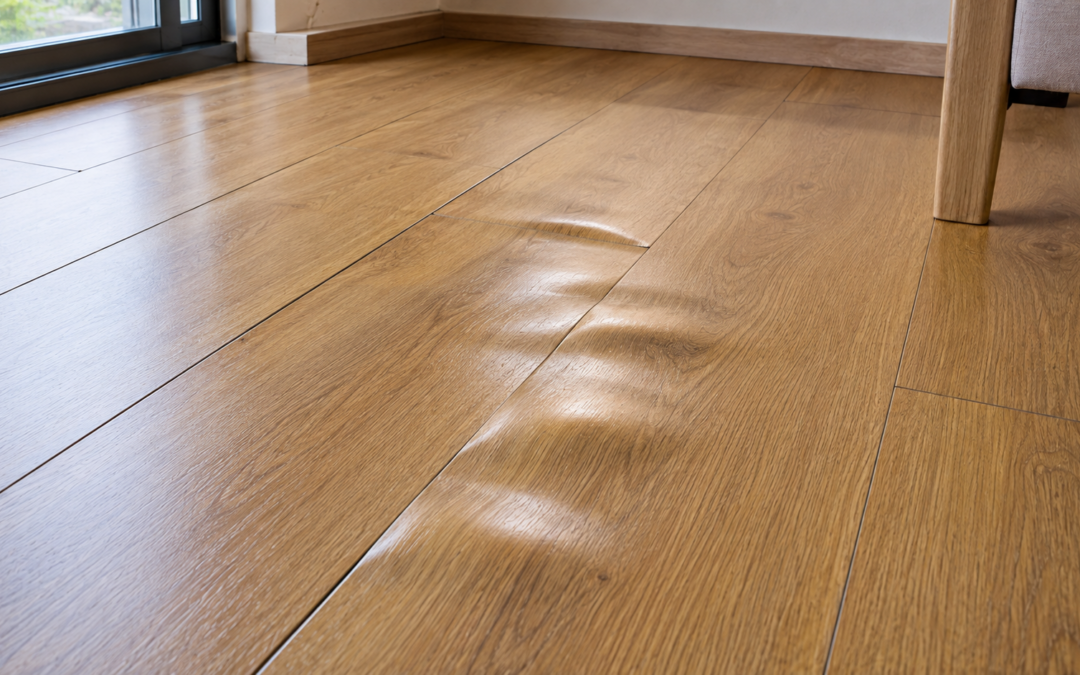
Laminate flooring is designed to be durable, attractive, and easy to maintain, but it isn’t immune to problems. One issue that concerns many homeowners and property managers is the appearance of bubbles or raised areas on the floor. These imperfections not only affect the appearance of the flooring but may also indicate an underlying problem that requires attention.
What causes laminate flooring to bubble? In some cases, the flooring itself has swollen from moisture. In others, the issue may result from improper installation, subfloor conditions, or damage that developed over time. Correctly identifying the cause is the first step toward deciding whether the problem can be repaired or if a larger solution is needed.
In this guide, we’ll explain the most common causes of bubbles in laminate flooring, how to recognize each one, and when a professional inspection may be beneficial.
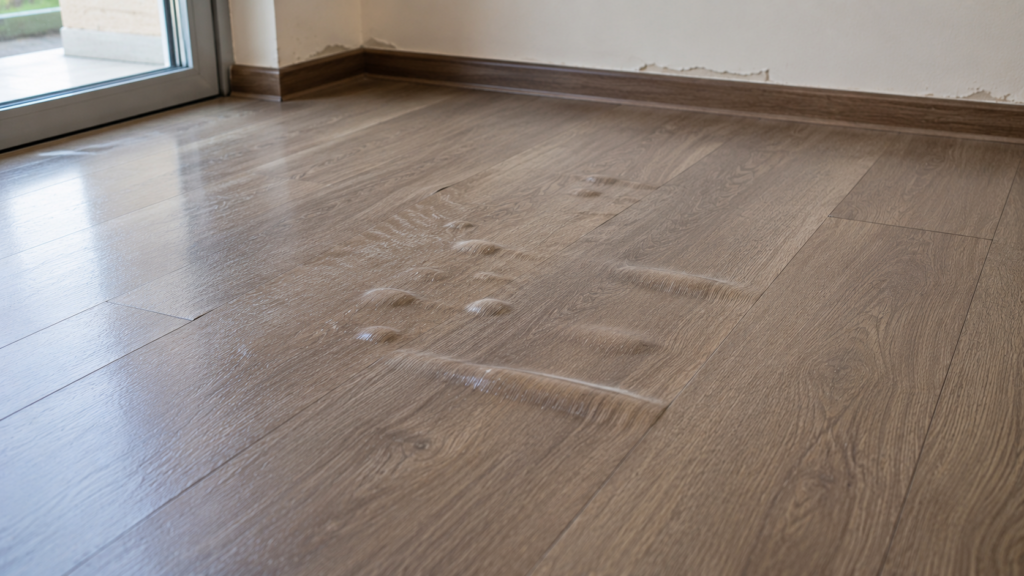
What Do Bubbles on Laminate Flooring Look Like?
The term bubbles is often used to describe several different types of surface irregularities, including:
- Raised or swollen spots on individual planks
- Blisters or lifting in localized areas
- Edges that appear higher than surrounding boards
- Soft or uneven sections underfoot
- Areas where the laminate surface appears distorted
Because different issues can look similar, visual appearance alone usually isn’t enough to determine the true cause.
5 Causes of Bubbles on Laminate Flooring
1. Moisture Damage
Moisture is by far the most common reason laminate flooring develops bubbles or swollen areas.
Unlike solid hardwood, laminate flooring contains a high-density fiberboard (HDF) core that readily absorbs water. When moisture enters through seams, edges, or underneath the flooring, the core expands. Once swollen, it rarely returns to its original size.
Common moisture sources include:
- Plumbing leaks
- Appliance leaks
- Flooding
- Wet mopping
- Pet accidents
- Moisture entering through open joints
If bubbling develops near a water source or after a spill, moisture should be the first possible cause investigated.
2. Poor Installation Practices
Installation problems can also contribute to bubbling.
Laminate flooring is designed as a floating floor, meaning it needs room to expand and contract with seasonal humidity changes. If installers leave insufficient expansion space around walls or fixed objects, the flooring has nowhere to move.
Instead of expanding naturally, pressure builds within the floor, causing planks to lift or buckle.
Signs of installation-related problems include:
- Bubbles extending across multiple planks.
- Raised areas appearing in the middle of a room.
- Flooring tight against walls or cabinets.
- Seasonal changes in the severity of the problem.
3. High Indoor Humidity
Even without direct water exposure, excessive humidity can cause laminate flooring to absorb moisture from the surrounding air.
This is especially common in homes where indoor humidity remains high for extended periods.
Humidity-related bubbling often develops gradually rather than appearing suddenly after a leak.
Maintaining indoor humidity within the manufacturer’s recommended range helps reduce the risk of moisture-related expansion.
4. Manufacturing Defects
Although less common, manufacturing defects can occasionally contribute to bubbling.
Problems may include:
- Weak bonding between laminate layers.
- Inconsistent core density.
- Defects in protective surface coatings.
A true manufacturing defect usually appears in isolated areas without evidence of moisture or installation problems.
An independent inspection is often needed to determine whether the issue is product-related or caused by external conditions.
5. Subfloor Moisture Problems
In some cases, the moisture originates from the subfloor rather than the laminate itself.
Concrete slabs or wood subfloors with excessive dampness can allow water vapor to migrate upward into the laminate flooring over time.
This often occurs when:
- Moisture testing was skipped before installation.
- Vapor barriers were omitted where required.
- Concrete had not fully dried before installation.
Subfloor moisture problems typically affect larger portions of the floor rather than isolated planks.
How to Identify the Actual Cause
Many flooring problems look alike, making accurate diagnosis important.
Consider the following questions:
- Did the bubbling appear after a water spill?
- Is the damage limited to one room?
- Are the affected planks near plumbing fixtures?
- Does the problem worsen during humid weather?
- Is the flooring pushing against walls or transitions?
- Was the flooring recently installed?
- Has the subfloor ever experienced moisture problems?
Answering these questions can help narrow down the possible causes, but a thorough evaluation is often needed to determine the exact reason for the problem.
Related Articles:
Why Flooring Inspections Save You Thousands in Repairs
How Floor Inspectors Identify Premature Flooring Failure
How Long Does a Professional Flooring Inspection Take?
Need Help Identifying the Cause of Bubbles on Laminate Flooring?
If bubbles on your laminate flooring continue to spread, return after repairs, or appear without an obvious cause, we can help identify what’s really happening beneath the surface. At Floorcovering Solutions Inc., we provide independent laminate flooring inspection services throughout the United States and Canada.
With more than 49 years of flooring industry experience, Henri Carr carefully evaluates factors such as moisture intrusion, installation quality, subfloor conditions, expansion space, and overall floor performance to determine the most likely cause of the problem.
Our objective inspections are based on recognized industry standards, giving homeowners, contractors, attorneys, insurance professionals, and manufacturers the information they need to make confident decisions about repairs, warranty claims, insurance matters, or construction disputes.
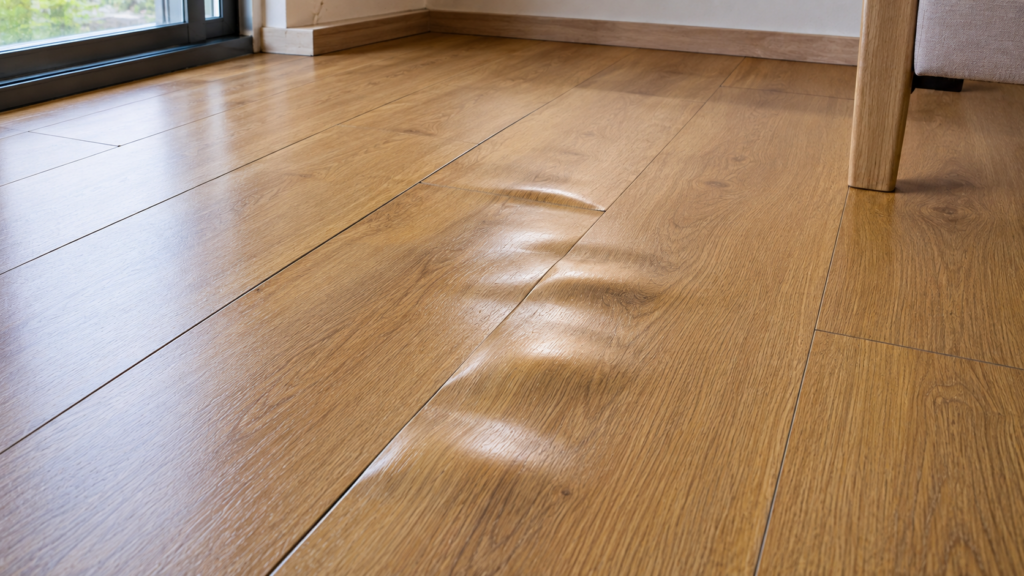
How to Prevent Laminate Flooring from Bubbling
Although not every issue is preventable, good maintenance and proper installation greatly reduce the risk.
Some practical tips include:
- Clean spills immediately.
- Avoid excessive water when cleaning.
- Maintain recommended indoor humidity levels.
- Ensure proper expansion gaps during installation.
- Test subfloor moisture before installation.
- Use manufacturer-approved underlayment.
- Repair plumbing leaks promptly.
- Follow the flooring manufacturer’s installation instructions.
- Consider a flooring consultation before installation.
Preventive measures are generally less costly than repairing widespread flooring damage.
Taking the time to evaluate your laminate flooring carefully, or seeking an independent professional inspection when necessary, can help protect your investment, avoid unnecessary repairs, and prevent more extensive damage in the future.